Nieppe Forest: A Living Heritage in the Heart of Inland Flanders
For anyone living or working around Haverskerque, Morbecque, Merville, Vieux-Berquin or Saint-Venant, Nieppe Forest is a familiar part of the landscape. We drive through it, walk its paths or pass along its edges, sometimes without fully appreciating everything it represents.
Yet behind its long forest avenues, ponds, damp paths and tall trees lies a rich history. It is a story of nature, power, war, forestry, water and the heritage passed down through generations.
Nieppe Forest is one of our area’s defining landmarks. Above all, it is a precious part of our local heritage, shaped by nature, history and the people who have lived and worked here.
A Remarkable Woodland in the Lys Plain
Nieppe Forest is a state-owned forest located mainly within the municipalities of Morbecque and Vieux-Berquin, in the Nord department. Covering approximately 2,600 hectares, it is the largest forest area in French Flanders.
In a predominantly agricultural landscape of cultivated fields, meadows, local streams known as becques and Flemish villages, the forest holds a special place. It provides a substantial green space within an otherwise open landscape.
Its importance also stems from its rarity. Over the centuries, much of the Lys Plain was cleared to make way for crops, farms, hamlets and transport routes. Nieppe Forest is a surviving reminder of an older landscape, when inland Flanders had more woodland and wetlands.
For an overview of its location and main features, see this introduction to Nieppe Forest.
An Ancient Forest Shaped by Water
Nieppe Forest lies on the flat, heavy and moisture-retaining soils of the Lys Plain. Water has always played a central role in shaping its landscape.
The forest contains ditches, seasonal and permanent ponds, wetland areas and an old drainage network. Water helps explain its ecological richness, as well as the historical challenges of managing and harvesting its timber.
In the past, wet conditions made some areas difficult to reach. They also helped preserve the forest’s distinctive character. While other land was more readily brought into cultivation, some wooded and waterlogged areas survived for longer.
The name Nieppe may reflect this history. One suggested origin links it to a Flemish word for elm, while another connects it with the Nieppe, a watercourse associated with the Lys river basin. These remain possible explanations rather than a firmly established origin.
La Motte-au-Bois Castle: A Historic Centre of the Forest
The history of Nieppe Forest is closely linked to La Motte-au-Bois Castle.
In the eleventh century, Robert I, Count of Flanders, also known as Robert the Frisian, established a fortress within the forest. The castle became an important seat of power, with the forest forming part of its estate.
This connection to a powerful estate helped preserve the woodland. At a time when agricultural clearance was reducing forest cover across the region, Nieppe remained valuable for hunting, timber production and the estate’s economy.
The castle has witnessed many historical events and has been associated with influential figures and families. La Motte-au-Bois is now part of the municipality of Morbecque.
For more information, see the article on La Motte-aux-Bois Castle.
A Forest Managed Since the Middle Ages
Nieppe Forest has long been a managed landscape. For centuries, it has been worked, supervised and organised.
In the Middle Ages, timber was an essential resource. It provided fuel, building materials and tools, supported various trades and met military needs. In an economically active region such as Flanders, it was particularly valuable.
Early regulations governed felling, timber sales and offences. The forest was organised into major sections whose names remain familiar today: Bois d’Amont, Bois Moyen and Bois d’Aval.
This longstanding organisation shows that Nieppe Forest was already regarded as a resource requiring careful management. Timber cutting, retained trees, rights of use and hunting were all subject to oversight.
Behind the forest’s natural appearance lies a long history of rules, practical knowledge and forestry skills.
Forest Avenues, Ditches and Canals: A Working Landscape
Anyone walking through Nieppe Forest soon notices how straight some of its paths are. These long avenues, known locally as drèves, reflect the practical organisation of the woodland.
They provided access for supervision, forestry work and timber extraction. Ditches drained the plots and made some areas easier to reach, while canals once helped transport timber.
Until around the beginning of the twentieth century, timber was extracted by hand or with horses, with some then transported out of the forest by water.
The forest was therefore a busy working environment. Forestry workers, guards, timber merchants, horse teams, hunters and local residents all formed part of its everyday life.
This human dimension matters. Nieppe Forest has long provided livelihoods and supported the local economy, alongside its role as a place for recreation.
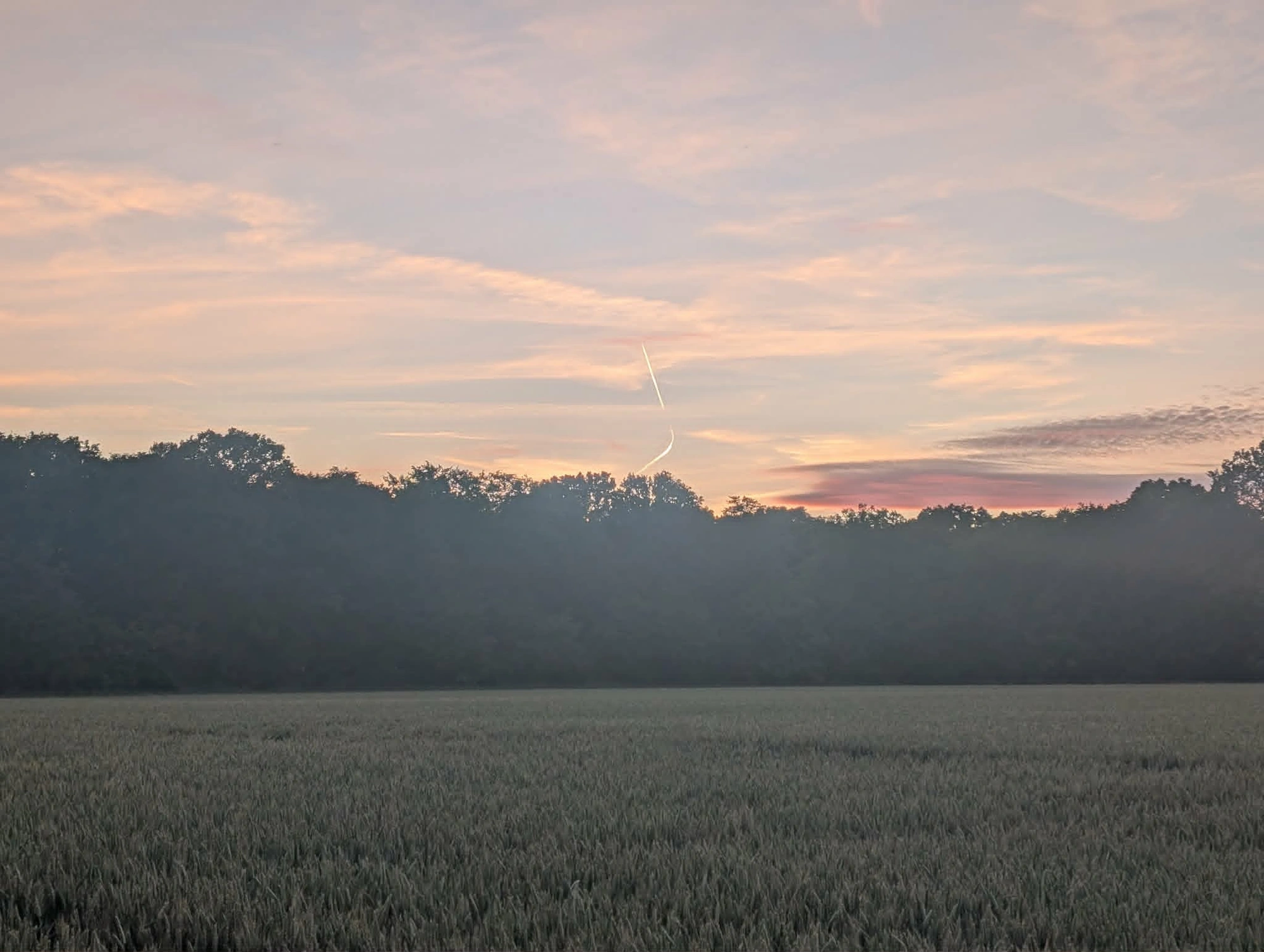
View the photograph of Nieppe Forest
A Forest Marked by War
Like many places in northern France, Nieppe Forest bears the traces of conflict.
During the First World War, it stood in a strategic area close to the front and underwent extensive timber cutting for military needs. In 1918, during the Battle of the Lys, the forest area played a role in stopping the German advance towards Hazebrouck.
The Second World War left further marks. The Bois des Huit-Rues, a separate woodland belonging to the same state-owned forest estate, contains a V1 launch site built by Nazi Germany in 1943 to target London and southern England.
The site was detected before completion and bombed as part of Operation Crossbow. Historical accounts indicate that no V1 flying bombs were launched from this base.
It is now listed as a French historic monument and remains an important local remembrance site. Further information is available in the article on the Bois des Huit-Rues V1 launch site.
Some depressions left by wartime bombing have become ponds, creating habitats for wildlife. Over time, these scars of conflict have become part of the forest’s ecological landscape.
A Refuge for Wildlife in an Agricultural Landscape
Nieppe Forest is an important habitat for wildlife.
Its damp conditions support a wide variety of plants and animals. Ponds, ditches and seasonal pools are particularly valuable for amphibians, including newts, frogs, toads and salamanders.
In a landscape with relatively little woodland, the forest provides a substantial refuge and contributes to connections between natural habitats.
The ecological interest of the forest and its edges is recognised through the ZNIEFF inventory, France’s inventory of natural areas of ecological, faunal and floral interest. The area named “La forêt domaniale de Nieppe et ses lisières” extends across several municipalities, including Thiennes and Steenbecque.
Natural history records can be explored through the French National Inventory of Natural Heritage, INPN.
This ecological richness also brings responsibilities. A living forest needs careful monitoring and management as climate conditions, diseases and patterns of use change.
A Forest Facing Disease and Climate Change
Nieppe Forest has been affected by ash dieback, known in French as chalarose. Caused by a fungus, the disease severely weakens ash trees, which were an important component of the forest, particularly in its wetter areas.
The disease has required safety work and changes to forest management.
Like many French forests, Nieppe faces several challenges: climate change, tree diseases, periods of drought, moisture-retaining soils and changes in the composition of its woodland.
The Office national des forêts, or ONF, manages France’s state-owned forests and oversees these adaptations. Its official website explains the role of public forest management: Office national des forêts.
The aim is to balance timber production, public access, biodiversity conservation and the forest’s ability to cope with future conditions.
A Place for Walking, Remembrance and Local Identity
Today, Nieppe Forest is a much-loved destination for local residents. People come to walk, run, enjoy the fresh air, observe wildlife or simply find some peace.
For families, walkers, heritage enthusiasts and those attached to their village, it offers more than green space. It helps give the area its identity.
It connects Morbecque, Haverskerque, Vieux-Berquin, Thiennes, Merville, Saint-Venant and the surrounding communities through a shared landscape and history.
Our surroundings are shaped by more than houses, roads and shops. Paths, trees, memories and places passed down through generations also contribute to our sense of home.
Living near Nieppe Forest means living close to a natural and historical heritage that spans centuries.
Why Nieppe Forest Still Matters Today
When discussing a property purchase, we often focus on floor area, bedrooms, land, budget and location. Yet the quality of everyday life extends beyond these practical criteria.
Nieppe Forest contributes to the area’s appeal through its natural setting, historical depth and strong local connections.
For buyers seeking a quieter lifestyle, access to nature or a place with a distinctive local identity, proximity to the forest can be an advantage. For established residents, it often holds personal and emotional significance.
It reflects a balance that many people seek: village life, nature, heritage and a pleasant everyday environment.
A Living Part of Our Local Heritage
Nieppe Forest is a living reminder of inland Flanders’ history.
Its story encompasses the Counts of Flanders, the lords of La Motte-au-Bois, forestry workers, soldiers, walkers and generations of local residents.
It bears the marks of water, work, war and time. It also shelters valuable and vulnerable wildlife that deserves care and attention.
Through this forest, part of our local history remains present in everyday life. For those living around Haverskerque, Morbecque, Merville, Vieux-Berquin or Saint-Venant, it remains a powerful symbol of a landscape rooted in nature, history and community.
Further Reading
Are you looking for your dream home near Nieppe Forest, or planning to sell a property in the area? I would be delighted to help you with your plans. You can also get an initial online estimate of your property’s value.